Office Address
Lahore, Punjab Pakistan
Phone Number
+0123456789
+012345678
Email Address
admin@idvcr.org
Lahore, Punjab Pakistan
+0123456789
+012345678
admin@idvcr.org
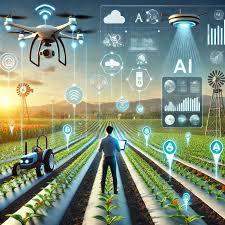
Artificial Intelligence (AI) in agriculture revolutionizes farming by leveraging advanced technologies to enhance productivity, sustainability, and efficiency. AI-powered tools such as drones, sensors, and machine learning algorithms enable precision farming, optimizing resource use like water, fertilizers, and pesticides. These technologies help monitor crop health, predict yields, detect pests and diseases, and automate irrigation systems. AI also aids in soil analysis, weather forecasting, and livestock management, enabling data-driven decisions that improve outcomes. By integrating AI, farmers can reduce waste, lower costs, and minimize environmental impact, ensuring food security and adapting to climate challenges. Overall, AI transforms agriculture into a smarter, more resilient industry capable of meeting the growing global demand for food.